Remote Work Guide 2026
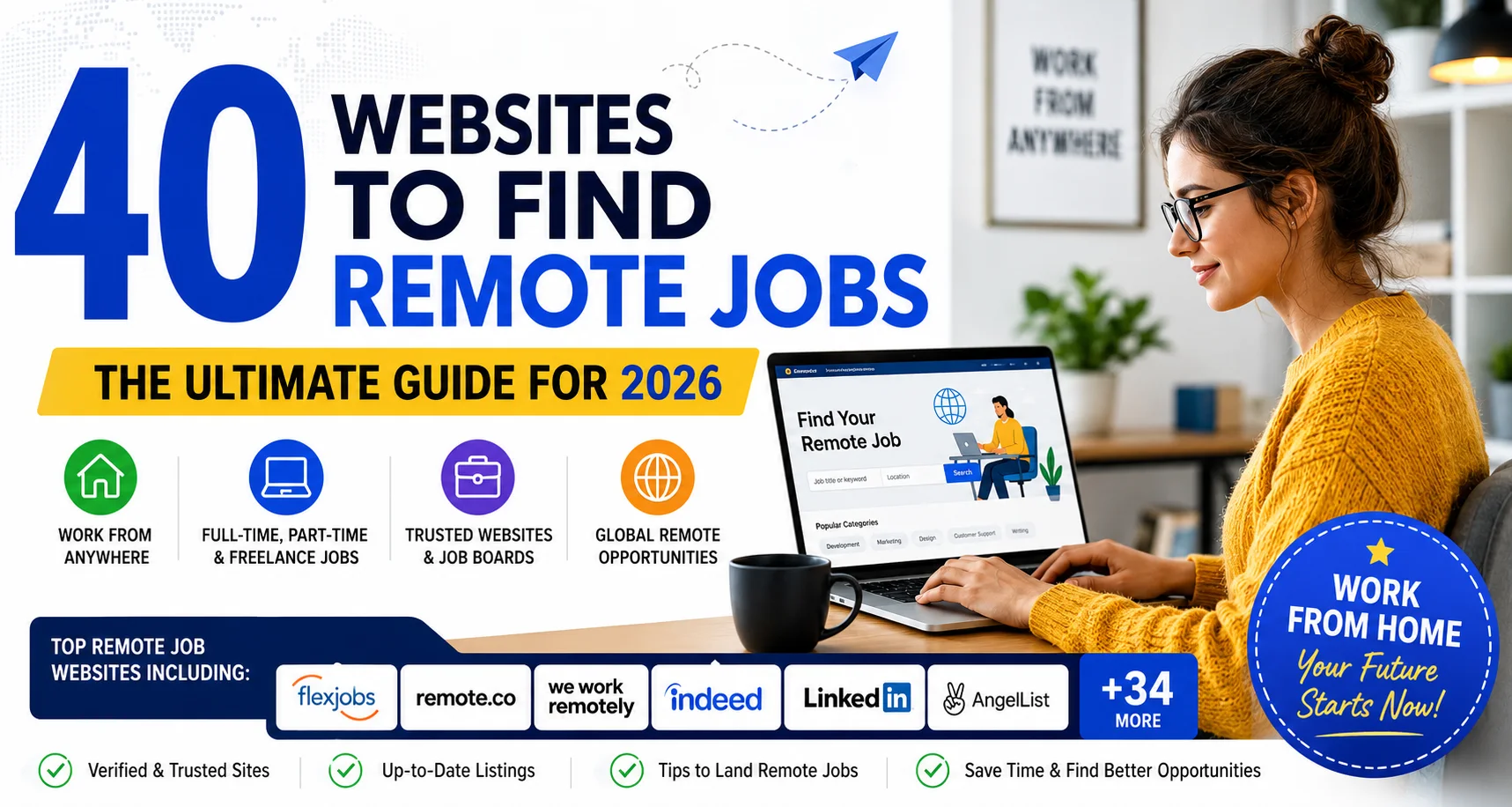
40 Websites to Find Remote Jobs: The Ultimate Guide for 2026
If you have been searching for 40 Websites to Find Remote Jobs in 2026, you have landed in exactly the right place. The remote work revolution is no longer a trend — it is a permanent shift. More than 12.7% of full-time U.S. employees now work entirely from home, and that number continues to climb. This guide walks you through the best platforms, organized by category, so you can find the perfect fit for your skills and goals.
Why You Need a List of 40 Websites to Find Remote Jobs
Not all job boards are created equal. Some cater exclusively to tech professionals, others to creatives, freelancers, or executive roles. Using just one or two platforms dramatically limits your exposure. A diversified search strategy — spread across specialized and general job boards — significantly increases your chances of landing the right role faster.
Remote work introduces geographic flexibility, meaning you’re now part of a global talent pool. The platforms below are built specifically to connect global employers with skilled remote workers. Use them strategically and you will see results.
Top General Job Boards: The Foundation
LinkedIn – Over 1 billion users, set job preferences to “Remote” and turn on Open to Work.
Indeed – Massive volume of remote-friendly postings, use the Remote filter.
Glassdoor – Combines job listings with anonymous employee reviews and salary data.
FlexJobs – Subscription-based, hand-screens every listing to eliminate scams.
Freelance Platforms: Build Your Own Remote Career
Upwork – Largest freelance marketplace, payment protection, excellent for all levels.
Fiverr – Gig-based services, perfect for creatives (design, video, copywriting).
Freelancer – Competitive bidding, active in tech, engineering, design.
Toptal – Elite marketplace (top 3% of applicants), high‑paying clients.
Guru – Solid Upwork alternative with strong traction in IT and consulting.
Remote‑First Job Boards (Heart of the 40)
We Work Remotely – One of the oldest and most respected remote job boards.
Remote.co – Includes job listings + company profiles, Q&As, and best practices.
Remotive – Curated newsletter + job board, active Slack community for networking.
Remote OK – Fast, tech‑forward, real‑time filtering by salary and tech stack.
JustRemote – International remote opportunities, ideal for global job seekers.
dRemote – Curates high‑quality design, development, and product roles.
Working Nomads – Perfect for digital nomads, sends a daily curated email digest.
Tech & Developer‑Specific Platforms
Stack Overflow Jobs – Trusted by developers, transparent salary and tech stack details.
AngelList (Wellfound) – Go‑to platform for startup jobs with equity compensation.
Hired – Employers come to you, great for mid‑to‑senior engineers.
Hubstaff Talent – Completely free, designed for remote contractors.
CloudPeeps – Community marketplace for marketing, content, and community roles.
Creative & Content‑Focused Remote Job Sites
Behance – Adobe’s portfolio platform + job board for designers and illustrators.
Freelance Writing Gigs – Daily‑updated aggregator for writers, bloggers, copywriters.
Content Writing Jobs – Focused exclusively on content strategists, SEO writers, editors.
ProBlogger Jobs – Trusted source for blogging and content writing jobs.
Designhill – Creative marketplace for graphic designers (contests, custom projects).
Global Opportunities & International Sites
OnlineJobs.ph – Leading platform for hiring virtual assistants from the Philippines.
Jooble – Aggregates listings from thousands of sources in over 70 countries.
SimplyHired – Well‑established aggregator with salary estimation tools.
The Muse – Company profiles, career coaching, and job listings.
Zirtual – Focused on virtual assistant roles (matches with entrepreneurs).
Remote Work Hub – Community‑driven platform with company reviews and resources.
Niche & Specialized Sites (Completing the 40)
Virtual Vocations – Subscription‑based, strong in healthcare, education, government.
Jobspresso – Handpicked, manually reviewed remote jobs in tech, marketing, support.
SkipTheDrive – Aggregates telecommute‑friendly positions across many industries.
Jobbatical – Combines international relocation with remote opportunities.
Hireable – Aggregator of millions of job listings and freelance opportunities.
TaskRabbit – Expanding remote‑friendly tasks like virtual assistance and data entry.
How to Maximize Your Success on These Platforms
- Optimize your profile – Use your target job title as headline, fill bio with relevant keywords, highlight results.
- Apply early and consistently – Set up job alerts; most postings get hundreds of applications in the first 48 hours.
- Tailor every application – Spend 10–15 minutes customizing for each job description.
- Build your portfolio before you need it – Even self‑initiated projects work.
- Network inside the platforms – LinkedIn groups, Remotive Slack, AngelList company pages.
- Research salaries – Use Glassdoor, LinkedIn Salary, and BLS data to benchmark.
For additional remote work career guidance, visit Remote.co’s Remote Work Resources – an extensive library of articles and best practices.
Avoiding Scams When Using Remote Job Sites
The explosion in remote work demand has increased job scams. Protect yourself:
- Never pay to apply. Legitimate employers never charge fees.
- Verify the company independently – check official website, LinkedIn, Glassdoor.
- Be suspicious of vague job descriptions with high earnings for minimal work.
- Use platforms with verification systems (Toptal, Hired, FlexJobs).
- Trust your instincts. If it feels too good to be true, it probably is.
The FTC maintains excellent resources on job scams at consumer.ftc.gov.
Frequently Asked Questions
Related Resources & Further Reading
Final Thoughts: Your Roadmap to Remote Work
The remote work landscape has never offered more opportunity. From freelance gigs on Upwork and Fiverr to full‑time salaried positions on LinkedIn and We Work Remotely, the tools available today are extraordinary. The key is knowing which platforms to use, how to present yourself effectively, and how to stay consistent in your search.
Start with two or three platforms that best match your skill set. Set up customized job alerts, dedicate time each day to applying and networking, and track your applications in a simple spreadsheet. Treat your job search like a part‑time job — because for a short period, that is exactly what it is.
The flexibility, freedom, and fulfillment that remote work can provide is within reach. The 40 websites in this guide are your roadmap. Now the only thing left to do is use them.