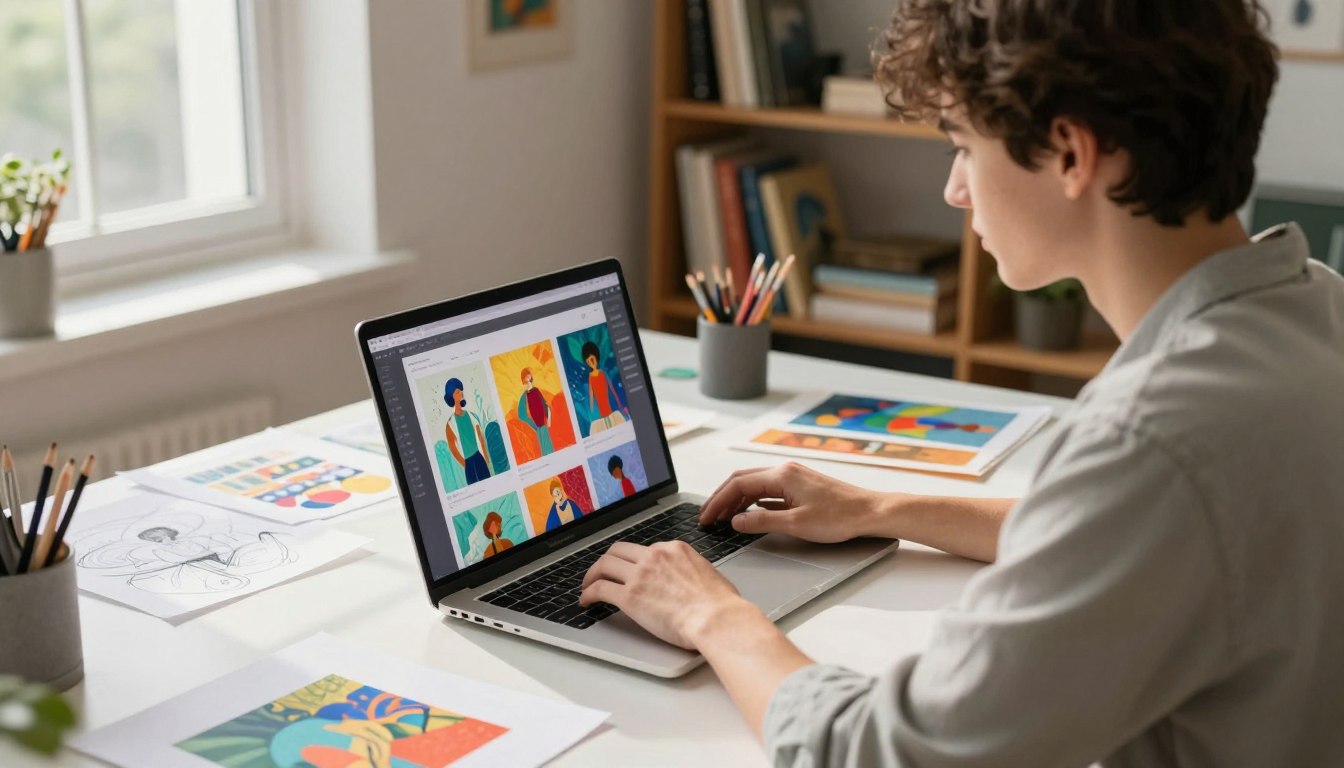
Unleash Your Creativity with a AI Image Generator Free
Ever dreamed of bringing your ideas to life in digital art? Now, thanks to modern tech, anyone can create amazing visuals without needing design skills. An ai image generator free is a great starting point for your artistic journey.
Just type a few words, and you open up a world of possibilities. This innovative tool connects your imagination to the screen. Whether you’re a hobbyist or a pro, a free ai image creator lets you try out new styles and ideas instantly.
Take this chance to show your creativity in new ways. Let your curiosity guide you as you see how these smart systems turn simple words into stunning images.
Key Takeaways
- Unlock your artistic potential with accessible digital tools.
- Create high-quality visuals using simple text prompts.
- Save time by automating complex design tasks.
- Experiment with diverse artistic styles effortlessly.
- Enjoy a user-friendly experience designed for everyone.
The Rise of Artificial Intelligence in Digital Art
AI in digital art is more than a trend; it’s a big change. It’s making the creative process different. Now, AI helps in making images and complex designs.
How AI is Changing the Creative Landscape
AI tools, like the artificial intelligence picture maker, make it easy for artists to create. They use smart algorithms to make images from text or other inputs.
The world of art is changing fast with AI. Artists can try new styles and techniques easily. For example, an image generator tool can make many images from one prompt.

Why Accessibility Matters for Aspiring Artists
For new artists, AI imagery software is key. It helps those who can’t afford or don’t know how to make digital art the old way. AI tools make art more accessible and open to everyone.
AI tools also help new artists learn. By seeing how AI makes art, they can learn about colors, composition, and more. This helps them improve their skills and style.
Understanding How an AI Image Generator Free Tool Works
AI-generated images come from a complex process. It involves neural networks and machine learning algorithms. These tools let a free image generation tool turn text into pictures.
The Role of Neural Networks and Machine Learning
Neural networks are key in AI image generators. They mimic the human brain with layers of nodes that process info. Machine learning trains these networks on huge image datasets.
This training lets the AI create new images. The more data it gets, the better the images look.

From Text Prompts to Visual Masterpieces
Turning text into images is a multi-step process. First, the AI reads the text using NLP. Then, it makes an image that matches the description.
For example, if you say “a futuristic cityscape at sunset,” the AI makes an image of it. This happens fast, usually in seconds.
| Step | Description |
|---|---|
| 1. Text Prompt Input | The user inputs a text description of the desired image. |
| 2. NLP Interpretation | The AI interprets the text prompt using NLP techniques. |
| 3. Image Generation | The AI generates an image based on the interpreted prompt. |
| 4. Output | The generated image is presented to the user. |
A collaborate image maker uses these technologies to make unique images. These images are great for digital art and marketing. As AI gets better, so will these tools, opening up new ways for digital art creators.
Top Features to Look for in an AI Imagery Software
To get the most out of an automatic image creator, it’s key to know its main features. When picking an AI imagery software, several things can really change your creative experience and the quality of what you get.
Customization Options and Style Presets
Customization is crucial for making an AI photo generator fit your needs. Look for software with many style presets, from realistic to abstract. It should also let you tweak things like color, texture, and layout.
- Adjustable style presets to match your creative vision
- Options to modify colors, textures, and other visual elements
- Ability to upload reference images for more accurate results
Resolution Quality and Export Formats
The resolution and export formats of a free image generating tool matter a lot. Make sure it can make high-resolution images. Also, it should support various formats for different uses, like web, print, or social media.
| Feature | Description | Importance Level |
|---|---|---|
| High-Resolution Output | Ability to generate images at high resolutions (e.g., 4K, 8K) | High |
| Multiple Export Formats | Support for various file formats (e.g., JPEG, PNG, SVG) | High |
| Customizable Export Settings | Options to adjust export settings (e.g., compression level, color profile) | Medium |

By focusing on these key features, you can pick an AI imagery software that meets your needs now and in the future.
Getting Started with Your First AI Picture Maker
Starting with an AI picture maker is both thrilling and a bit scary. But, with the right help, you’ll soon be making amazing pictures. The first step is to learn how to use the tool well.
To start, you need to set up your account and arrange your workspace. This first step is key for a smooth experience with your online AI image generator.
Setting Up Your Account and Workspace
First, pick the best free image AI software for you. Most sites have an easy sign-up, using social media or email.
- Choose a username that shows who you are as an artist.
- Get to know the dashboard and its features.
- Customize your workspace to fit your style, like layout and default settings.
Navigating the User Interface for Beginners
The interface of your AI picture maker is easy to use. But, spending a bit of time learning it can make a big difference.
Find the main parts like the prompt field, style options, and preview. Knowing these will help you use the platform better and start making the pictures you want.
Once you get the hang of it, you can dive into more advanced features to make your pictures even better.
Mastering the Art of Prompt Engineering
The secret to getting the most out of an online image generator AI is mastering prompt engineering. This skill lets users create inputs that lead to high-quality, relevant images from their AI image generator. Knowing how to talk to these AI systems boosts productivity and artistic output.
Descriptive Language and Keyword Selection
Effective prompt engineering starts with descriptive language and smart keyword selection. When making a prompt, be as detailed as you can about what you want. Describe the scene, objects, colors, and mood. For example, instead of saying “a dog,” say “a fluffy white Samoyed puppy sitting on a green lawn under a bright blue sky.”
Choosing the right keywords is also key. Using terms related to your image helps the AI understand and produce better results. For instance, if you’re making a futuristic cityscape, use keywords like “neon lights,” “skyscrapers,” and “hover cars.”
Adjusting Parameters for Better Results
Most image generator using AI tools let you tweak settings for better images. You can adjust resolution, aspect ratio, and detail level. Trying different settings can greatly change the image’s quality and fit.
- Resolution: Higher resolutions mean more detailed images but need more power.
- Aspect Ratio: Changing the aspect ratio makes the image fit specific uses, like social media or print.
- Detail Level: More detail makes images look real but might add unwanted stuff.
Using Negative Prompts to Refine Output
Using negative prompts is a smart trick in prompt engineering. These tell the AI what not to include. For example, if you’re making a historical scene but get modern objects, tell it to avoid “modern clothing” or “cars.” This makes your image closer to what you want.
By using descriptive language, choosing the right keywords, adjusting settings, and negative prompts, you can greatly improve your AI image generator results. Mastering prompt engineering not only makes images better but also makes creating easier. It lets artists and designers focus on their ideas.
Exploring the Best Free AI Image Generator Platforms
Now, many top AI image generator platforms are free. They change how we make digital art. These tools have various features for all skill levels.
There are many free image creation tools to pick from. Let’s look at some popular ones.
Capabilities of Microsoft Designer
Microsoft Designer uses AI to make amazing visuals. It’s easy to use and has lots of features. It’s perfect for both newbies and experts.
It has many templates and options. This makes it simple to make professional-looking designs without needing a lot of design knowledge.
Creative Potential of Adobe Firefly
Adobe Firefly is a top AI design software free tool. It’s loved by many creatives. It works well with other Adobe tools, which is great for those who already use Adobe.
Firefly’s AI makes amazing images and edits. It lets users create ai images for free with high quality.
Using Stable Diffusion for Advanced Control
Stable Diffusion is great for those who want more control over their images. It lets users customize a lot. It’s best for advanced users and developers because it offers detailed control.
Each platform has its own strengths. They meet different needs. Whether you’re a pro designer or just starting, there’s a free AI image generator for you.
Ethical Considerations and Copyright in AI Art
AI-generated art, made with tools like the automatic image generation tool, brings up big ethical and copyright questions. As AI art becomes more common, it’s key to grasp its effects.
Creating and sharing AI art deals with tricky issues like who owns it and copyright. When you use a free photo AI generator or an artificial intelligence image creator, you need to know the rules about using the art you make.
Understanding Usage Rights and Licensing
It’s important to think about usage rights and licensing when making art with AI tools. Different places have different rules about using the images you make. For example, some free AI image generators let you use the images for money, while others don’t.
| Platform | Commercial Use Allowed | License Type |
|---|---|---|
| Microsoft Designer | Yes | Royalty-free |
| Adobe Firefly | Yes | Commercial license |
| Stable Diffusion | Varies | Depends on model and usage |
Respecting Intellectual Property in Digital Creations
It’s crucial to respect intellectual property when using AI art tools. This means knowing that some AI models are trained on copyrighted materials. You should be careful not to break any copyrights when making art.
Best practices for respecting intellectual property include:
- Reviewing the terms of service for the AI tool being used
- Ensuring that generated art does not closely resemble copyrighted works
- Considering the origin of the training data for the AI model
By keeping these ethical points in mind and following best practices, creators can use AI art tools in a responsible and effective way.
Integrating AI Imagery into Your Professional Workflow
Adding AI imagery to your work can change the game. It brings new creativity and efficiency. As a digital artist, using free AI tools can boost your projects and keep you ahead in the digital world.
AI images are great for many parts of your job, like social media and concept art. Learning to use them well can make your work smoother. This lets you focus on the creative big picture.
Enhancing Social Media Content with AI
Social media loves visuals, and AI images can make your content pop. With a free AI image generator, you can make unique, top-notch visuals. These grab your audience’s eye.
For example, you can:
- Make eye-catching thumbnails for videos or blog posts
- Create custom graphics for social media posts
- Make branded content that fits your marketing plan
| Platform | AI Image Use Case | Benefits |
|---|---|---|
| Generating visually appealing posts and stories | Increased engagement, brand consistency | |
| Creating custom graphics for tweets | Enhanced visual appeal, better brand recognition | |
| Producing high-quality cover photos and ads | Improved ad performance, increased brand visibility |
Using AI for Rapid Prototyping and Concept Art
AI image generators are also great for quick prototyping and concept art. They let you try out many ideas fast. This helps you explore and refine your concepts quickly.
For example, in game development, AI art can help designers see characters, environments, and props early on.
As a digital artist, using AI imagery can unlock new creative paths and boost productivity. By adding these tools to your workflow, you can create high-quality work faster. This keeps you competitive in your field.
Common Challenges and How to Overcome Them
Creating perfect images with AI can be hard. Knowing common problems helps a lot. When using a free AI image generator, users often face issues that slow them down.
Dealing with Distorted Hands and Faces
One big problem is when hands and faces get distorted. This happens because AI models struggle with human anatomy.
To fix this, give more details in your prompts. Say things like “realistic hands” or “detailed facial features.” This helps the AI get it right.
Also, use image generator tools with advanced settings. Some tools let you edit the images after they’re made.
Improving Consistency Across Multiple Images
Keeping images consistent is hard. It’s key for projects that need a certain look.
To keep things consistent, use the same prompt style and settings. Some free AI image generators let you use previous images or style presets.
Here’s a look at features that help with consistency:
| Feature | Platform A | Platform B | Platform C |
|---|---|---|---|
| Style Presets | Yes | No | Yes |
| Reference Image Option | No | Yes | Yes |
| Customization Options | Advanced | Basic | Advanced |
By knowing these challenges and using the right tools, users can get better results. This makes working with AI image generators more rewarding.
Advanced Techniques for Professional Digital Art Creators
Professional digital artists are always looking for new ways to improve their work. AI imagery software is a key tool for them. It helps artists work more efficiently and create better art.
AI has changed digital art by making it more creative and precise. Techniques like inpainting and outpainting are changing how artists work on their projects.
Inpainting and Outpainting Explained
Inpainting and outpainting are advanced AI techniques for editing images. Inpainting fills in missing parts of an image. Outpainting adds new content to an image, making it bigger.
These methods use complex algorithms to understand and enhance images. They make images look real and smooth.
- Inpainting is great for removing unwanted parts from an image.
- Outpainting lets artists grow their images beyond the original size.
Combining AI Tools with Traditional Editing Software
Many artists mix AI tools with traditional editing software. This mix uses AI’s creativity and precision with the control of traditional tools.
An artist might use AI to create a base image or do complex tasks like inpainting. Then, they use software like Adobe Photoshop to fine-tune it.
| Technique | AI Imagery Software | Traditional Editing Software |
|---|---|---|
| Inpainting | Automates the process of filling in missing parts of an image | Offers manual control over the inpainting process |
| Outpainting | Generates new content beyond the original image boundaries | Allows for manual extension and editing of the image |
| Image Refinement | Provides initial high-quality image generation | Enables detailed refinement and adjustments |
By using these tools together, artists can create amazing art. This art might be hard or impossible to make with old methods alone.
The Future of Automatic Image Generation Tools
The world of digital art is on the verge of a big change. This change comes from better automatic image generation tools. We will see better quality and more variety in AI-made images as technology gets better.
More platforms are adding artificial intelligence picture maker features. This makes it easier for people to make complex images. We can expect this trend to grow, making AI image making easier for more people.
Emerging Trends in Generative Media
New trends are shaping the future of generative media. One big trend is personalization. This lets users make AI content that fits their needs. Another trend is combining AI with AR and VR for more immersive experiences.
The table below shows some key trends and their uses:
| Trend | Description | Potential Application |
|---|---|---|
| Personalization | Tailoring AI-generated content to user preferences | Customized marketing materials |
| Integration with AR/VR | Combining AI with immersive technologies | Enhanced gaming and simulation experiences |
| Improved Resolution and Quality | Advancements in generating high-resolution images | Professional graphic design and media production |
What to Expect from Next-Generation AI Models
Next AI models will be even more advanced. They will understand context and nuance better. This means we’ll see more realistic and detailed images that get the message right.
As automatic image creator tools get better, we’ll see new uses in many fields. This includes entertainment, advertising, education, and healthcare.
The future of AI image making looks very promising. We’re on the edge of big changes that will make creating high-quality images easier for everyone.
Conclusion
The world of AI-generated art is vast and full of possibilities. With a free AI image creator, you can unlock new levels of imagination. This lets you bring your ideas to life.
Whether you’re a professional artist or just starting out, tools like Microsoft Designer and Adobe Firefly are great. They offer features to enhance your workflow.
Using an online AI image generator can make your creative process smoother. It lets you focus on your art. With AI, you can make high-quality images quickly and efficiently.
This opens up new opportunities for artistic expression and innovation. As you explore AI-generated art, remember to experiment and practice. Don’t be afraid to try new things and push boundaries with a free AI image creator.
FAQ
How can I start using an ai image generator free of charge?
Creating ai images for free is easy! Just visit sites like Microsoft Designer or Bing Image Creator. Sign up, type what you want to see, and get many options in seconds.
Why is a free ai image creator so revolutionary for new artists?
It makes art more accessible. Free ai image creators remove financial and technical barriers. They let anyone with creativity turn ideas into images without expensive tools or long training.
How does an image generator using ai actually turn words into pictures?
It uses neural networks and machine learning. The software is trained on billions of images and descriptions. It creates new images based on your text prompts.
What features should I prioritize in an ai design software free version?
Look for tools with many style options and high resolution. It’s also good if you can choose aspect ratios and export formats like PNG or JPG.
Is it difficult to navigate a free image creation tool for the first time?
No! Modern platforms like Canva or Adobe Firefly are easy to use. They have simple interfaces and tutorials to help you start.
What is “prompt engineering” and why does it matter for a free image generation tool?
Prompt engineering is using specific language to guide the AI. It helps get the best results from a free image tool. Include details like lighting and mood in your prompts.
Which is the best free image ai software currently available?
There are many great options. Microsoft Designer is good for quick graphics, while Adobe Firefly offers creative potential. Stable Diffusion is best for advanced users because it’s open-source.
Are there copyright concerns when using an artificial intelligence image creator?
Yes, be careful with usage rights. Most platforms let you use images for fun, but commercial use varies. Always check the terms to respect intellectual property.
Can I use a free photo ai generator for professional work?
Yes! Many professionals use free ai generators for social media or prototyping. They’re great for teams to quickly create concept art.
How do I fix common issues like distorted hands in an online image generator ai?
Distorted features are common. To improve, refine your prompt with keywords like “highly detailed hands.” Some tools also have features to clean up images.
What are inpainting and outpainting in a digital art creator?
These are advanced techniques. Inpainting erases parts of an image and fills them with new content. Outpainting expands images to create larger scenes. They’re powerful for editing.
What is the future of the automatic image generation tool?
The future is bright. We expect tools to handle video and 3D objects soon. Next-generation AI models like DALL-E 3 will make imagination and reality closer, making tools essential for creatives.