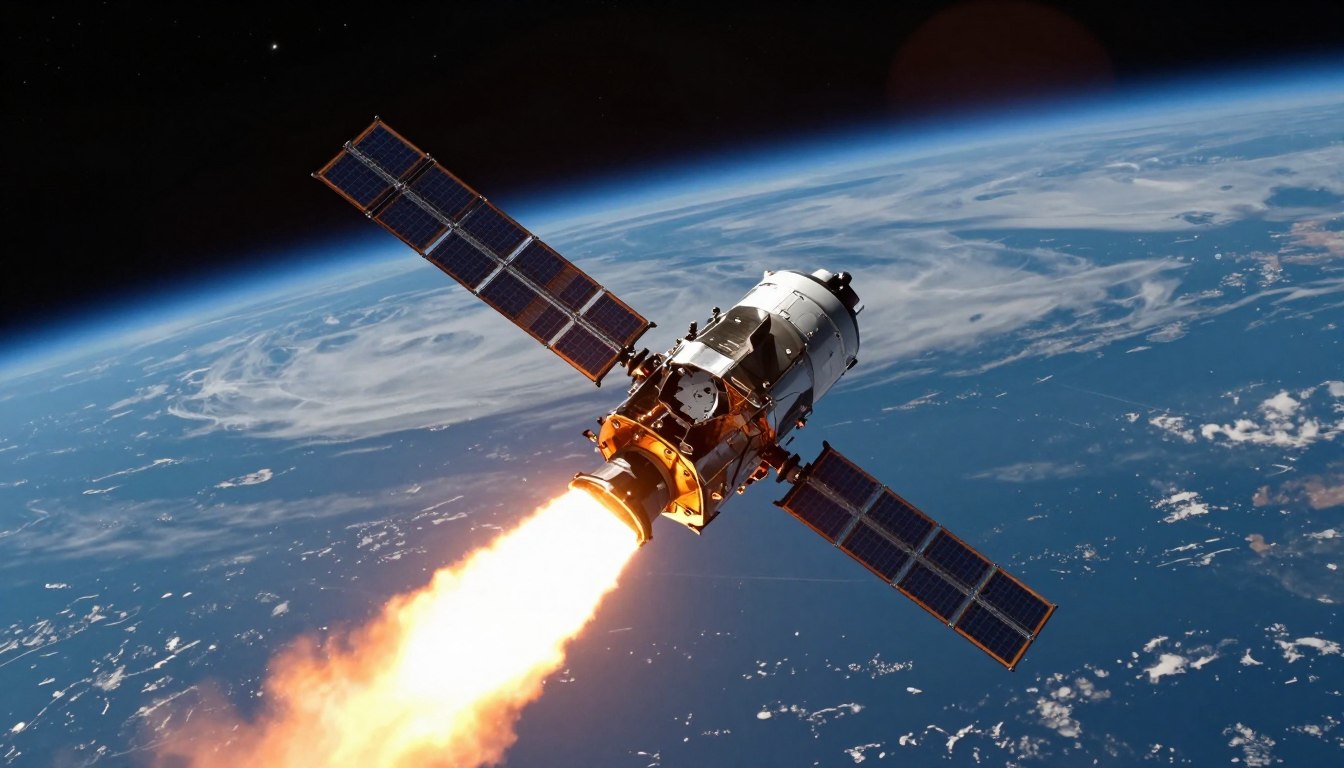
Spacex Starlink Satellite Deorbit Process and What to Know
Our skies are filling up with technology, making it crucial to keep space clean. The Spacex starlink satellite deorbit process marks a significant step in managing space hardware. It shows how private companies are taking responsibility for their space assets.
By actively removing old satellites, Spacex ensures its vast network doesn’t pose a risk to others. This responsible approach raises the bar for private spaceflight worldwide.
The spacex starlink deorbit strategy highlights the intricate nature of modern engineering. It’s not just about launching satellites; it’s about ensuring they can safely return to Earth. This requires advanced technology and precise control.
Market Valuation: Monitor the latest private secondary market data, funding rounds, and estimated share prices.
Track SpaceX Stock Price TodayKey Takeaways
- Proactive removal of hardware prevents dangerous space debris.
- The process is a gold standard for private aerospace sustainability.
- Automated systems allow for precise control during the descent phase.
- Safety remains the top priority for orbital traffic management.
- Efficient disposal helps keep low Earth orbit accessible for future missions.
Understanding the Need for Satellite Deorbiting
Low Earth orbit is becoming increasingly crowded, making responsible satellite management crucial. A clean orbital environment is vital for global communications and scientific research. Proactive satellite end-of-life disposal is key to preventing hazardous space junk buildup.

The Growing Challenge of Orbital Debris
The rapid growth of satellite constellations has significantly increased space density. If not managed, this could lead to the Kessler Syndrome. This scenario involves collisions creating a debris cascade, making certain orbits unusable for generations. It poses a significant threat to vital infrastructure essential for our modern world.
SpaceX Commitment to Orbital Sustainability
SpaceX has made sustainability a core part of its mission. By focusing on spacex starlink sustainability, the company ensures satellites are removed from orbit after use. This shows that rapid technological advancement can go hand-in-hand with responsible stewardship of space.
The company uses advanced propulsion systems to lower satellite altitudes for safe reentry. These efforts are crucial for spacex starlink space sustainability. By setting high standards, SpaceX encourages others to follow environmentally conscious practices.
Regulatory Requirements for End-of-Life Disposal
International space agencies and regulatory bodies have set strict guidelines to manage orbital debris risks. Following these rules is essential for mission success. Operators must have a clear plan for satellite end-of-life disposal to obtain launch licenses and maintain operational permits.
| Strategy | Primary Benefit | Risk Level |
|---|---|---|
| Controlled Reentry | High precision impact | Low |
| Natural Decay | Low energy cost | Moderate |
| Active Removal | Clears legacy debris | High |
Following these guidelines helps protect the orbital commons from overcrowding. By strictly adhering to these protocols, the industry can innovate while preserving the integrity of space for future generations.
The Anatomy of a Starlink Satellite
SpaceX has transformed satellite design, focusing on responsible end-of-life disposal from the outset. Each satellite boasts a modular architecture, facilitating efficient production and consistent performance. This approach guarantees that every part has a role, even in retirement.

Design Features for Controlled Reentry
The satellites’ physical design is crafted to reduce risks during atmospheric entry. Engineers select advanced materials for their satellites, ensuring complete burn-up upon reentry. This controlled reentry is key to SpaceX’s satellite disposal strategy, preventing debris from hitting Earth.
Propulsion Systems Used for Deorbit Maneuvers
For de-orbiting, satellites employ high-efficiency electric propulsion systems. These thrusters are fine-tuned for a precise disposal procedure at the end of life. Utilizing ionized gas, the system provides the thrust needed for a predictable and safe descent.
Autonomous Navigation and Collision Avoidance
Safety is paramount during the mission’s final stages. Each satellite comes equipped with an autonomous navigation system that continuously scans the space environment. This technology enables automatic maneuvers to avoid collisions with other objects. This ensures a secure disposal process, preventing additional orbital debris.
This integration showcases SpaceX’s dedication to responsible space operations. Through meticulous engineering, SpaceX sets a gold standard for the aerospace industry in satellite disposal.
The Spacex Starlink Satellite Deorbit Procedure
The SpaceX Starlink satellite deorbit process showcases exceptional orbital engineering and safety. It employs a highly automated system to manage each unit with precision after its mission ends. This method ensures a sustainable environment in low Earth orbit.

Step 1: Identifying Satellites for Decommissioning
The first step in starlink satellite removal involves monitoring the fleet’s health continuously. Engineers track battery performance, propulsion system integrity, and communication link stability for every unit in the constellation.
When a satellite shows signs of degradation or reaches its mission limit, it’s flagged for disposal. This proactive identification ensures the satellite remains fully maneuverable during the descent. Safety is the primary driver in this initial selection phase.
Step 2: Lowering the Orbital Altitude
After a unit is marked for retirement, the spacex starlink deorbit sequence starts. The satellite uses its onboard electric propulsion system to gradually lower its altitude.
By firing its thrusters in a controlled manner, the satellite drops from its operational orbit into a lower trajectory. This maneuver is carefully calculated to avoid interference with other active satellites. The goal is to reach a perigee that naturally encourages atmospheric drag.
Step 3: Preparing for Atmospheric Entry
The final stage of the starlink satellite deorbit plan focuses on orientation and systems shutdown. The satellite adjusts its attitude to maximize drag, which accelerates the descent toward the dense layers of the atmosphere.
Before entering the atmosphere, the satellite performs a final series of self-checks to ensure all systems are ready for the burn-up phase. This spacex starlink satellite removal strategy guarantees that the hardware disintegrates completely, leaving no dangerous debris behind. Every step is designed to protect the orbital environment for future generations.
Executing the Final Deorbit Maneuver
The final deorbit maneuver is crucial for a clean orbital environment. It ensures the spacex starlink satellite disposal is controlled and predictable. Engineers guide the hardware back to our atmosphere with strict guidelines.

Calculating the Reentry Window
Timing is key for a successful satellite deorbiting mission. Teams must pinpoint the exact reentry window. This ensures the craft enters the atmosphere at the right angle and speed.
Advanced software models predict atmospheric density changes in real-time. These predictions allow the team to adjust the trajectory before descent. Accuracy is paramount to ensure the satellite’s intended path toward the ocean.
Managing Fuel Reserves for Final Descent
Efficient fuel management is crucial for a successful satellite deorbit maneuver. Engineers monitor propellant levels to ensure enough power for the final burn. Every fuel drop is accounted for to ensure the mission’s success.
If fuel levels are lower than expected, the team can adjust the descent profile. This flexibility ensures a safe and reliable disposal process. Optimizing the burn helps the satellite maintain orientation until the end.
Communication Protocols During the Deorbit Phase
Keeping a constant link with the satellite is essential throughout the process. Communication protocols ensure ground control receives telemetry data until the final deorbit. This continuous flow of information allows engineers to monitor the satellite’s health.
If anomalies occur, the team can send corrective commands immediately. Reliable communication is the mission’s lifeline. Once the final signal is sent, the satellite begins its transition into the atmosphere, marking its operational end.
Atmospheric Reentry and Burn-up Dynamics
SpaceX’s approach to the end-of-life phase of satellites showcases the advanced engineering in modern space travel. Once a satellite has fulfilled its mission, it must transition from orbital speed to a controlled descent. This is done through strict satellite reentry procedures, ensuring safety for those on the ground.

The Physics of Satellite Disintegration
Upon entering the upper atmosphere, the craft faces intense friction, leading to extreme heat. This heat transforms the kinetic energy into thermal energy, causing the structure to disintegrate. The starlink satellite reentry is engineered to be swift, with the craft fully disintegrating before reaching lower altitudes.
Material Selection for Minimal Ground Impact
Engineers select materials with low melting points to vaporize during descent. This is a critical aspect of the starlink satellite reentry process. By choosing materials that do not withstand heat, the risk of any parts reaching the ground is minimized.
| Component Type | Material Property | Reentry Outcome |
|---|---|---|
| Structural Frame | Low-melting Aluminum | Complete Vaporization |
| Solar Arrays | Thin-film Polymers | Rapid Disintegration |
| Internal Electronics | Silicon and Copper | Thermal Decomposition |
Monitoring the Reentry Path
SpaceX continuously monitors the descent to ensure the path stays on track. This spacex starlink satellite reentry strategy uses real-time telemetry and ground-based tracking. High transparency confirms that each satellite is safely disposed of in the mid-ocean.
Space Sustainability Initiatives and Best Practices
Keeping the orbital environment clean demands a focused effort on space sustainability initiatives. As satellite numbers increase, the industry must prioritize long-term safety and responsible operations. Companies can ensure space remains accessible for future generations through proactive measures.
Collaborating with Global Space Agencies
SpaceX works closely with international space agencies to enhance safety protocols. This collaboration enables the exchange of crucial data on orbital conditions and potential hazards. By adhering to global standards, SpaceX contributes to a safer environment for all space operators.
Information sharing is a cornerstone of modern space management. Agencies and private firms can better predict and avoid collisions through effective communication. This cooperative spirit is crucial for the success of long-term orbital missions.
Advancing Satellite Deorbit Technology
The focus on satellite deorbit technology is a cornerstone of modern aerospace engineering. These advancements enable satellites to descend in a controlled manner at the end of their operational lives. By setting these high standards, companies demonstrate a commitment to reducing long-term clutter.
Effective space debris mitigation requires the reliable removal of inactive hardware from orbit. New propulsion systems and autonomous navigation tools are making this process more efficient. These advancements ensure the spacex starlink orbit cleanup process is both safe and predictable.
Transparency in Orbital Debris Mitigation
Transparency is essential for building trust within the international community. SpaceX provides clear data on its spacex starlink cleanup efforts, making them visible and verifiable. This open approach encourages other operators to adopt similar practices, benefiting the entire space ecosystem.
The following table outlines the key pillars of responsible satellite management and their impact on a cleaner orbital environment.
| Practice | Primary Goal | Impact Level |
|---|---|---|
| Data Sharing | Collision Avoidance | High |
| Controlled Deorbit | Debris Reduction | Critical |
| Public Reporting | Industry Trust | Moderate |
| Autonomous Systems | Operational Safety | High |
Safety Protocols and Risk Management
With thousands of satellites in space, safety protocols are crucial for sustainable exploration. Managing the end-of-life phase for these units requires a complex system of safety measures and constant monitoring. By focusing on proactive risk management, operators aim to keep the orbital environment safe for future use.
Mitigating Risks to Active Satellite Constellations
Keeping active constellations safe from potential threats is a top priority during deorbiting. Engineers use advanced navigation systems to guide decommissioned satellites away from operational paths. This careful maneuvering is key to effective space debris mitigation, protecting active hardware during descent.
Ensuring Zero Ground Casualty Probability
The company is dedicated to zero ground casualty probability through meticulous design and planning. High-fidelity trajectory modeling allows teams to predict where and how a satellite will reenter the atmosphere. These spacex space debris mitigation efforts ensure most material burns up completely, leaving no hazardous remnants.
Advanced material selection is crucial in this safety strategy. By choosing components that disintegrate efficiently, the risk to people and property on the ground is nearly eliminated. This meticulous approach to spacex orbital debris mitigation sets a high standard for the aerospace industry.
Coordination with Space Traffic Management
Successful disposal operations depend on clear communication with global space traffic management agencies. Sharing precise telemetry data enables seamless coordination, preventing potential conjunctions with other objects in orbit. Through consistent spacex starlink space debris mitigation practices, the company ensures a safe and orderly environment for all spacefaring nations.
Technological Innovations in Satellite Disposal
Our increasing reliance on space demands more advanced satellite deorbit technology. Engineers are working tirelessly to prevent aging satellites from becoming permanent hazards in our crowded orbits. These innovations are crucial for a clean and safe space environment for future missions.
Advancements in Electric Propulsion Efficiency
SpaceX has led the way in improving end-of-life management for satellites. Their use of efficient ion thrusters in spacex satellite deorbiting technology enables precise maneuvers with minimal fuel. This efficiency is a significant step towards long-term sustainability.
These advanced propulsion systems bring several key advantages for satellite operators:
- Reduced fuel mass, enhancing payload capacity during launch.
- Improved control over descent trajectories for safe burn-up.
- Extended operational life by conserving propellant for final maneuvers.
Automated Deorbiting Software Systems
Human error poses a significant risk in space operations. To mitigate this, developers are creating automated deorbiting software systems for autonomous disposal. This satellite deorbiting technology ensures precise calculations for every maneuver.
Autonomous systems enable satellites to respond quickly to orbital changes. This shift to automation increases the reliability of decommissioning procedures. It ensures that satellites will follow their intended path back into the atmosphere.
Future Concepts for Active Debris Removal
The industry is exploring innovative methods for orbital debris removal beyond simple self-disposal. Concepts include robotic capture missions and laser-based nudging systems to clear debris from high-traffic zones. These innovations mark the next step in maintaining a safe space environment.
Collaboration between private companies and space agencies will be essential for these ambitious projects. As these technologies advance, we can expect a significant decrease in space debris risks. The aim is a sustainable future where space remains a safe haven for innovation and exploration.
Environmental Report: Read the full investigation on atmospheric satellite deorbits and emerging orbital regulations.
Read Tom’s Hardware AnalysisCommon Misconceptions About Satellite Reentry
When discussing space sustainability, misconceptions about satellite reentry often dominate the conversation. Many fear that decommissioned hardware will remain in orbit indefinitely, creating a hazardous debris field. However, modern engineering ensures the meticulous management of these objects.
Advanced satellite disposal methods are employed to prevent hardware from contributing to orbital clutter. These strategies are proactive, not reactive.
Addressing Concerns Regarding Space Junk
Concerns abound that spacex starlink deorbiting satellites will become permanent space junk. This is not true. These satellites are engineered to descend into the Earth’s atmosphere in a controlled manner.
Upon reaching the lower atmosphere, they disintegrate due to intense heat. This design prevents long-term debris accumulation in low Earth orbit. It’s a fundamental aspect of responsible spacex starlink satellite disposal methods.
Clarifying the Visibility of Reentering Satellites
Some worry that reentering satellites will create constant, bright streaks in the night sky. While reentry events can be bright, they are rare and brief. Most occur over remote ocean areas, far from populated regions.
Due to their design, these satellites burn up quickly, not lingering in the sky. The public rarely witnesses these events, as they are timed to avoid major flight paths and cities.
The Reality of Satellite Disposal Environmental Impact
There’s ongoing debate about the environmental impact of these operations. Scientific studies confirm that the materials in modern satellites are chosen to minimize upper atmosphere impact. The spacex starlink deorbiting satellites adhere to this stringent standard.
By focusing on clean disposal, the industry strikes a balance between technological advancement and environmental responsibility. The table below compares different approaches in terms of safety and efficiency.
| Disposal Method | Primary Benefit | Environmental Impact |
|---|---|---|
| Controlled Reentry | High Accuracy | Minimal |
| Atmospheric Burn-up | Zero Debris | Negligible |
| Graveyard Orbit | Long-term Storage | Low |
Conclusion
SpaceX shows a strong commitment to responsible space operations through its systematic approach to satellite disposal. The company prioritizes safety and environmental stewardship, setting a high standard for the aerospace industry. This dedication ensures that low Earth orbit remains a viable resource for future generations.
The sophisticated engineering behind these deorbit maneuvers showcases the importance of proactive debris mitigation. Each controlled reentry is a testament to the progress made in satellite design and autonomous navigation. These efforts protect our skies while supporting global connectivity growth.
Understanding these technical processes helps us appreciate the complexity of modern space exploration. You play a vital role in this journey by engaging with the facts surrounding orbital sustainability. Share your thoughts on the evolution of space traffic management or reach out to learn more about how private companies shape the future of our planet.
FAQ
Why is the SpaceX Starlink satellite deorbit process so important for the industry?
The spacex starlink satellite deorbit process is crucial for maintaining our orbital environment’s health. By actively managing satellite end-of-life disposal, SpaceX prevents decommissioned units from becoming dangerous space junk. This sets a high standard for space debris mitigation and overall spacex starlink sustainability.
How does SpaceX help prevent the Kessler Syndrome?
SpaceX is committed to spacex starlink space sustainability by following strict regulatory requirements for end-of-life disposal. Their proactive starlink satellite deorbit plan ensures satellites are removed from orbit long before they can contribute to debris density. This supports orbital debris removal efforts effectively.
What specific technology allows Starlink satellites to exit orbit safely?
Each satellite has advanced propulsion systems used for deorbit maneuvers and autonomous navigation and collision avoidance software. This spacex satellite deorbiting technology enables the craft to lower its altitude and navigate safely away from other active constellations during its final mission phase.
What are the main steps in the starlink satellite removal process?
The satellite disposal procedure involves three main steps. First, identifying satellites for decommissioning based on health or age. Second, lowering the orbital altitude using onboard thrusters. Finally, preparing for atmospheric entry to ensure a controlled and predictable descent.
How do engineers ensure the satellite enters the atmosphere at the right time?
Precision is key! Engineers must accurately calculate the reentry window and carefully manage fuel reserves for final descent. This satellite deorbiting mission requires constant monitoring through established communication protocols during the deorbit phase to ensure the satellite deorbit maneuver is executed perfectly.
Will parts of a Starlink satellite hit the ground during reentry?
SpaceX uses specific material selection for minimal ground impact, meaning the satellites are designed to be “demisable.” During the starlink satellite reentry process, the intense heat of the atmosphere causes the unit to undergo complete atmospheric burn-up. This is a core part of their satellite reentry procedures to ensure zero ground casualty probability.
Does SpaceX work with other organizations on orbital debris mitigation?
Absolutely! SpaceX prioritizes collaborating with global space agencies and maintains high transparency in orbital debris mitigation. By sharing data and advancing satellite deorbit technology, they contribute to global space sustainability initiatives and spacex starlink orbit cleanup efforts.
How does SpaceX manage the risk to other active satellites during deorbiting?
Safety is maintained through constant coordination with space traffic management. The spacex space debris mitigation protocols use advanced trajectory modeling to ensure that any spacex starlink satellite removal mission does not interfere with the orbits of other active spacecraft.
What innovations are being developed for future satellite disposal methods?
SpaceX is leading the way with advancements in electric propulsion efficiency and automated deorbiting software systems. Looking ahead, the company is also exploring future concepts for active debris removal to further enhance spacex starlink space debris mitigation.
Are reentering satellites a threat to the environment?
There are many common misconceptions about satellite reentry, but the reality is that the satellite disposal environmental impact is minimal. Because spacex starlink deorbiting satellites are designed to burn up completely in the upper atmosphere, they do not leave behind lasting space junk or hazardous debris on the Earth’s surface.
What makes SpaceX’s approach to satellite disposal a benchmark?
The combination of automated deorbiting software, spacex starlink satellite disposal methods, and a commitment to starlink satellite reentry safety makes their process a model for others. Their spacex orbital debris mitigation strategy proves that large constellations can be managed responsibly without compromising the future of space exploration.